For Homes
We repair softeners in houses, condos, and rentals across Fountain Valley. Most home calls finish the same day, and we test a full regeneration before we leave.
- No soft water at the tap
- Salt not dropping
- Water pooling near unit
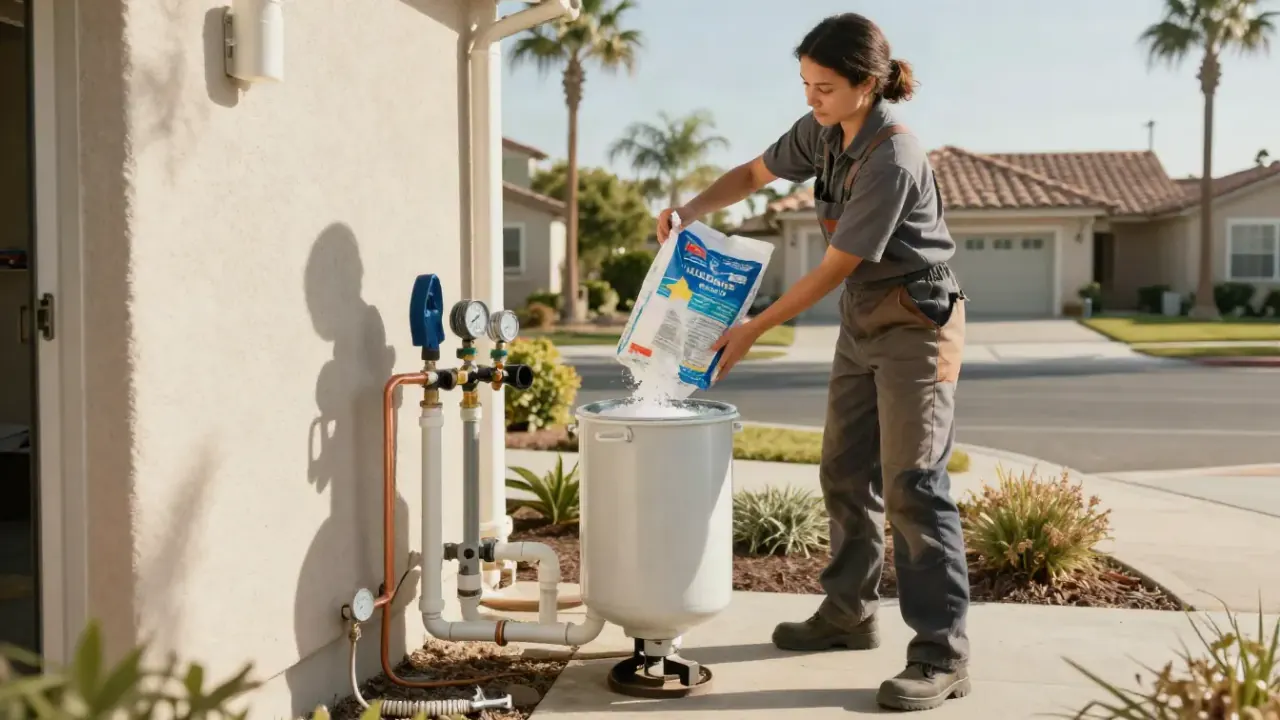
When your softener stops softening, every tap in the house feels it. Our team handles Water Softener System Repair Fountain Valley CA for Culligan, Kinetico, Fleck, and Clack units, plus every major brand in between. We test hardness, trace the fault, and get soft water back the same visit. Call and we will tell you straight what is wrong and what it takes to fix it.
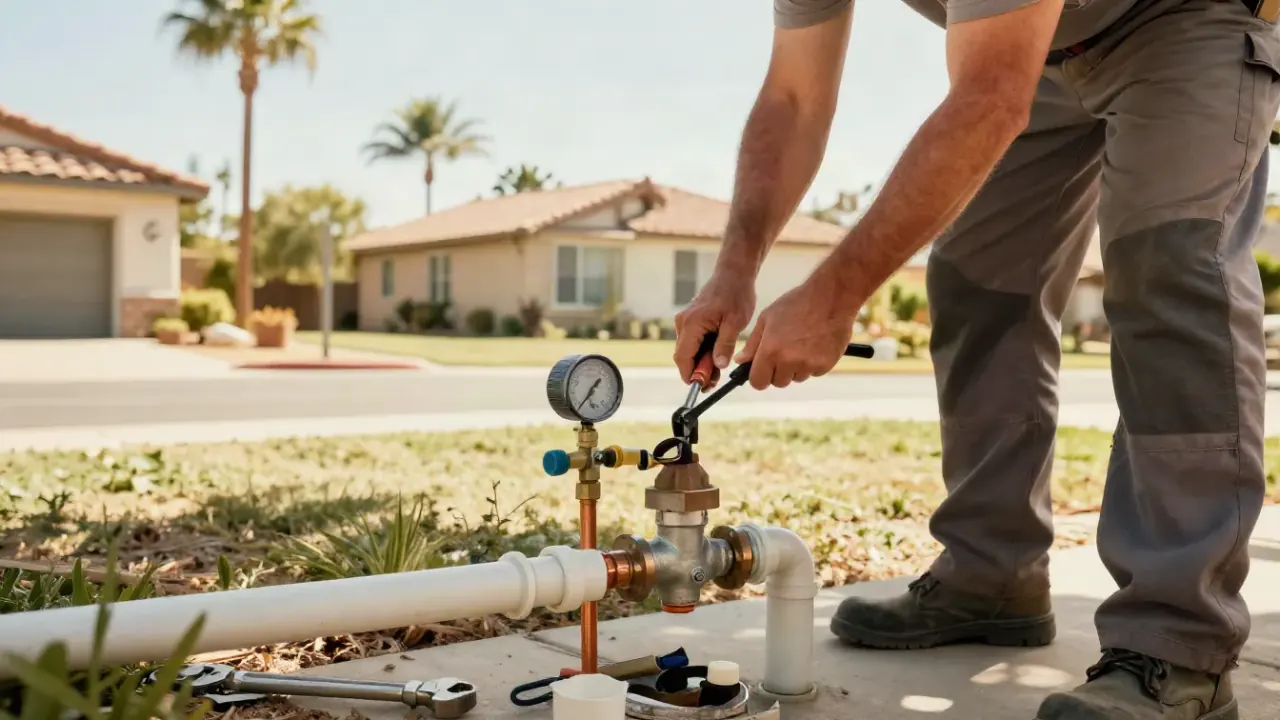 Hardness testValve inspectionBrine check
Every repair visit starts with a full diagnosis and ends with a tested regeneration cycle. Here is what is standard on a Fountain Valley Water Softener System Repair call, and what we quote separately when the job calls for it.
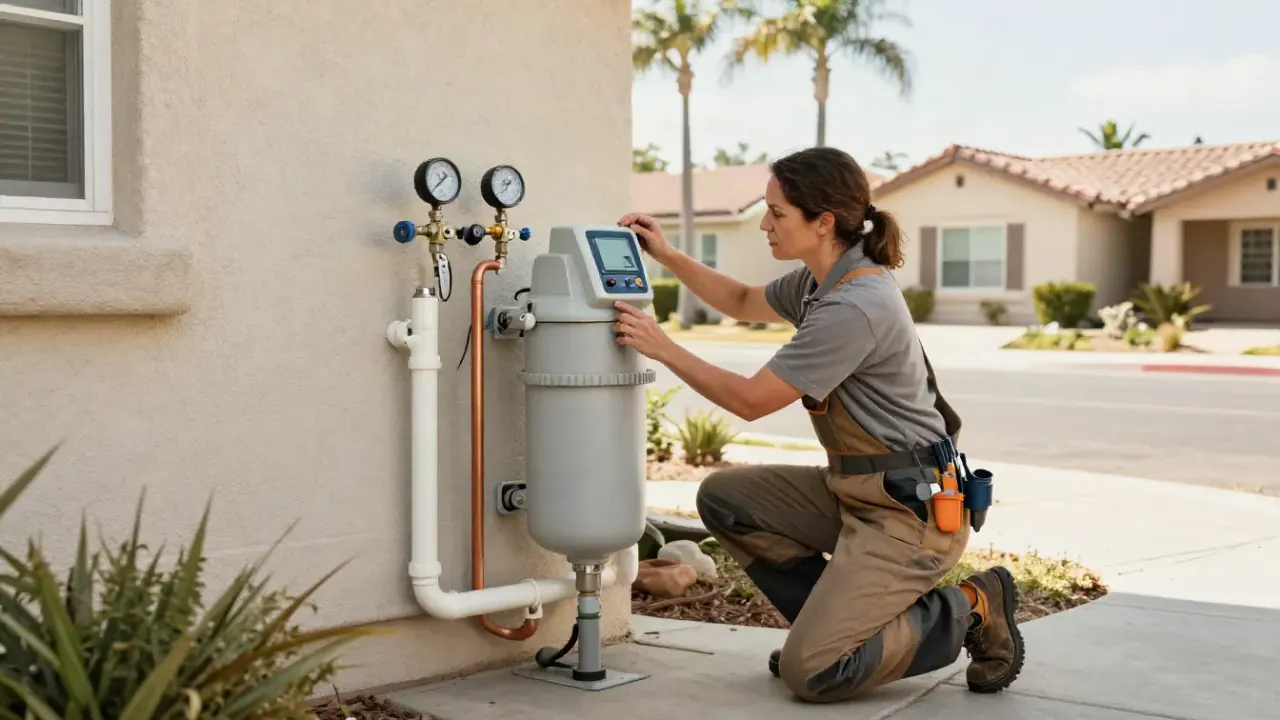
We test raw and treated water, check household pressure with a gauge, and inspect the control valve, brine line, and drain flow. You get a clear explanation of what failed and why before any repair begins.
Stuck pistons, worn seals, and failed valve motors are the most common softener faults. We rebuild or replace the valve assembly, then reprogram the control valve for your water conditions and household size.
Salt bridges, clogged brine wells, and overflowing brine tanks get corrected on the spot. We clear the blockage, check the brine line for scale, and set the salt level and dosage so regeneration actually completes.
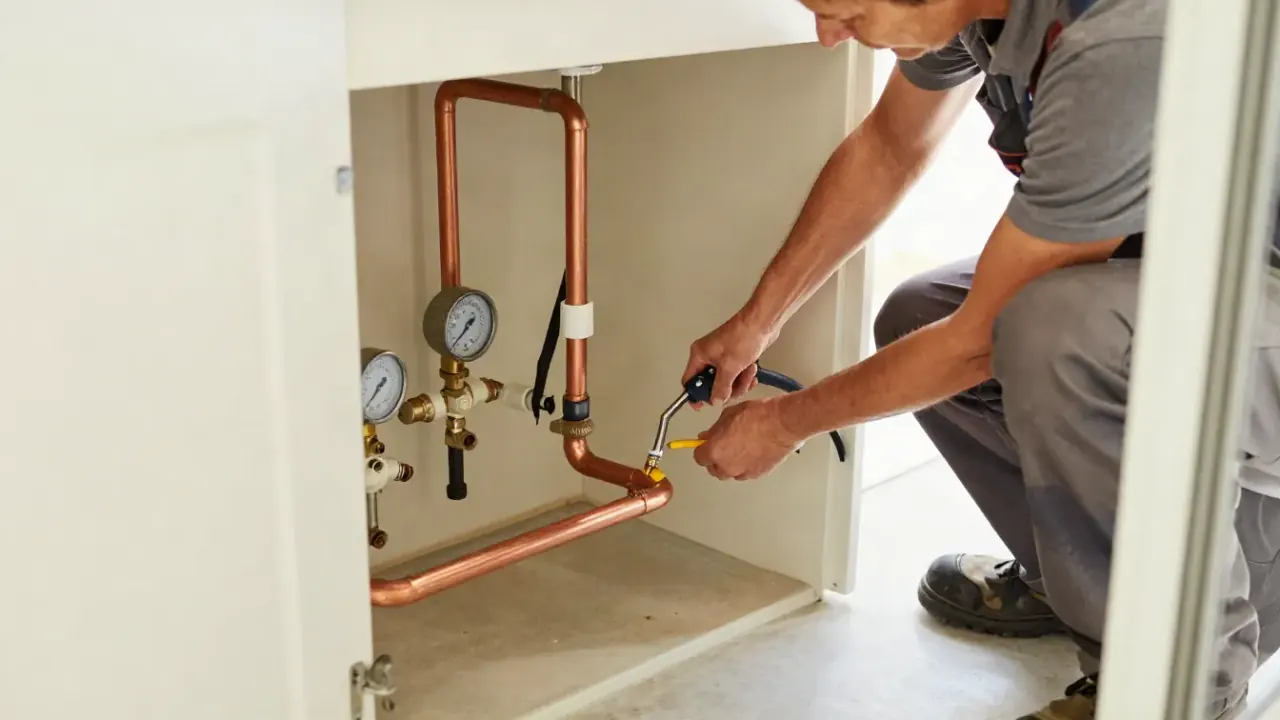
Leaking drain tubing and cracked fittings get replaced with new PEX tubing or PVC fittings. We route and secure the line so it drains correctly and meets California Plumbing Code requirements for an air gap.
We run a full regeneration cycle and watch it finish, then walk you through salt levels, hardness settings, and how to spot a salt bridge early. You leave the visit knowing how your unit works.
The approach is the same for a home and a business. What changes is the access, the schedule and who needs the paperwork.
We repair softeners in houses, condos, and rentals across Fountain Valley. Most home calls finish the same day, and we test a full regeneration before we leave.
We service softeners in small commercial and multi-unit properties around Fountain Valley. Scheduling works around your operating hours, and we document what was repaired.
A plain-language look at what Water Softener System Repair involves and when it is needed.
See how it worksWater Softener System Repair Fountain Valley CA is the diagnostic and mechanical work that returns a failing softener to full softening capacity. That means testing incoming hardness with a water hardness test kit, checking the control valve and brine draw, and confirming the resin bed still holds its ion exchange capacity. Common culprits include a salt bridge in the brine tank, resin fouling, a stuck regenerating cycle, or a failed valve motor. We isolate the fault before we quote, so you pay for the fix, not guesswork.
Most Fountain Valley homes sit on hard Colorado River water, and that mineral load punishes softeners year after year. Scale builds in the resin tank, the brine well clogs, and the unit quietly stops regenerating. If your dishes come out spotty or your water heater is popping, the softener may already be behind. We handle water softener repair in Fountain Valley, California for homeowners and property managers who want the unit fixed, not replaced on a hunch.
A softener that runs without softening is usually one failed part away from working again.
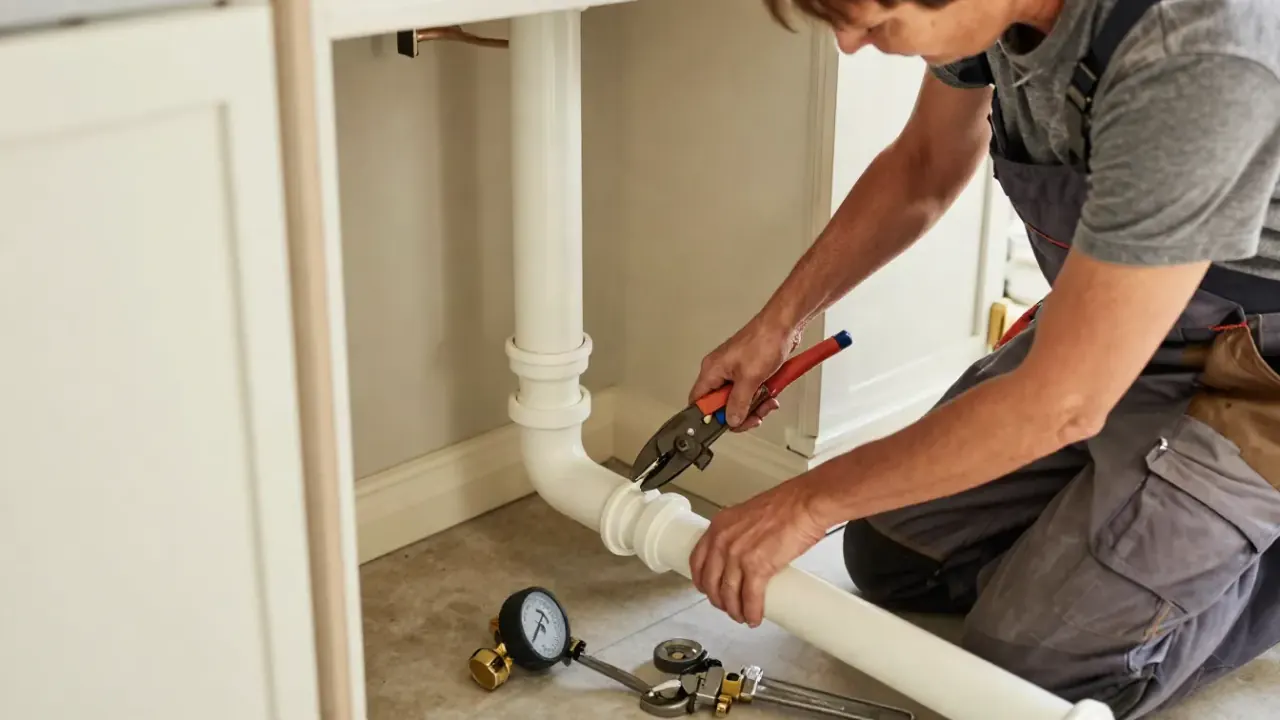
Five steps, no mystery. Here is exactly what happens from your first call to the moment soft water returns.
You describe the symptoms, we ask the right questions: no soft water, salt not dropping, water in the brine tank, or a unit stuck mid-cycle. That five-minute conversation tells us which parts to load and whether this is a same-day fix or a scheduled visit.
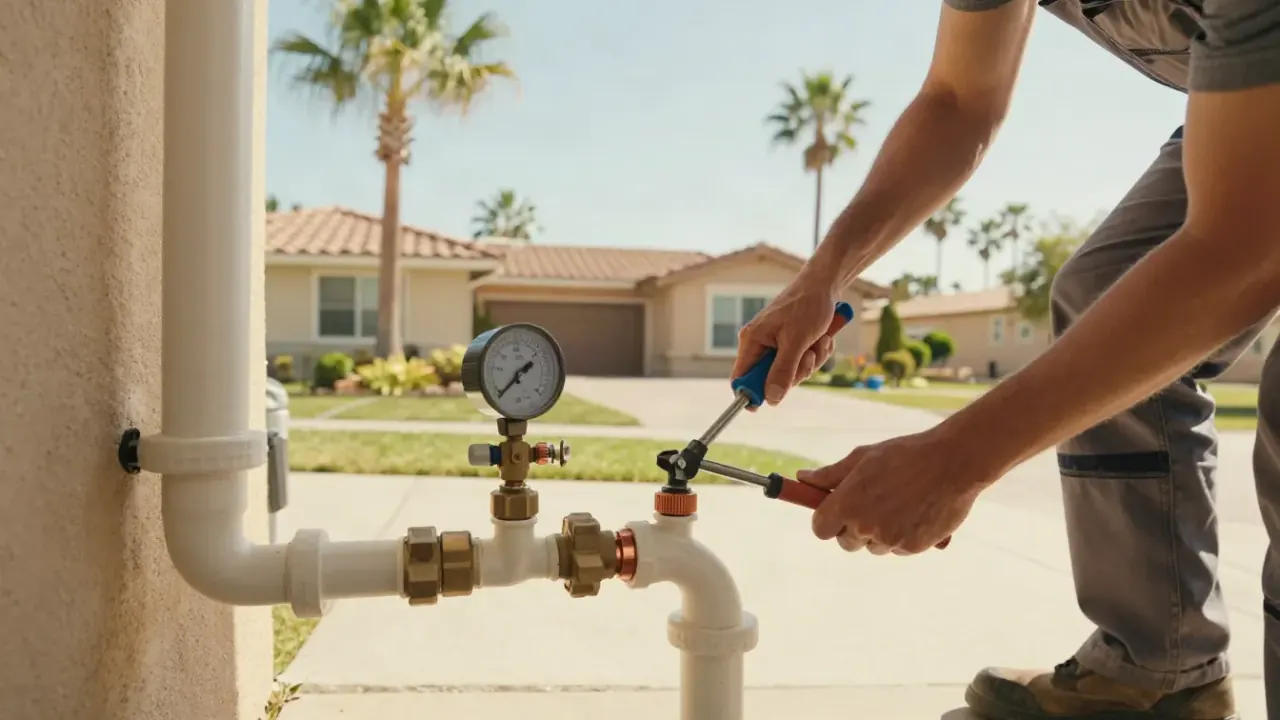
We test raw and treated hardness, check the TDS meter reading, and inspect the control valve, brine line, and drain flow. A pressure gauge confirms household pressure is not the real problem. Diagnosis takes 20 to 30 minutes and pinpoints the fault.
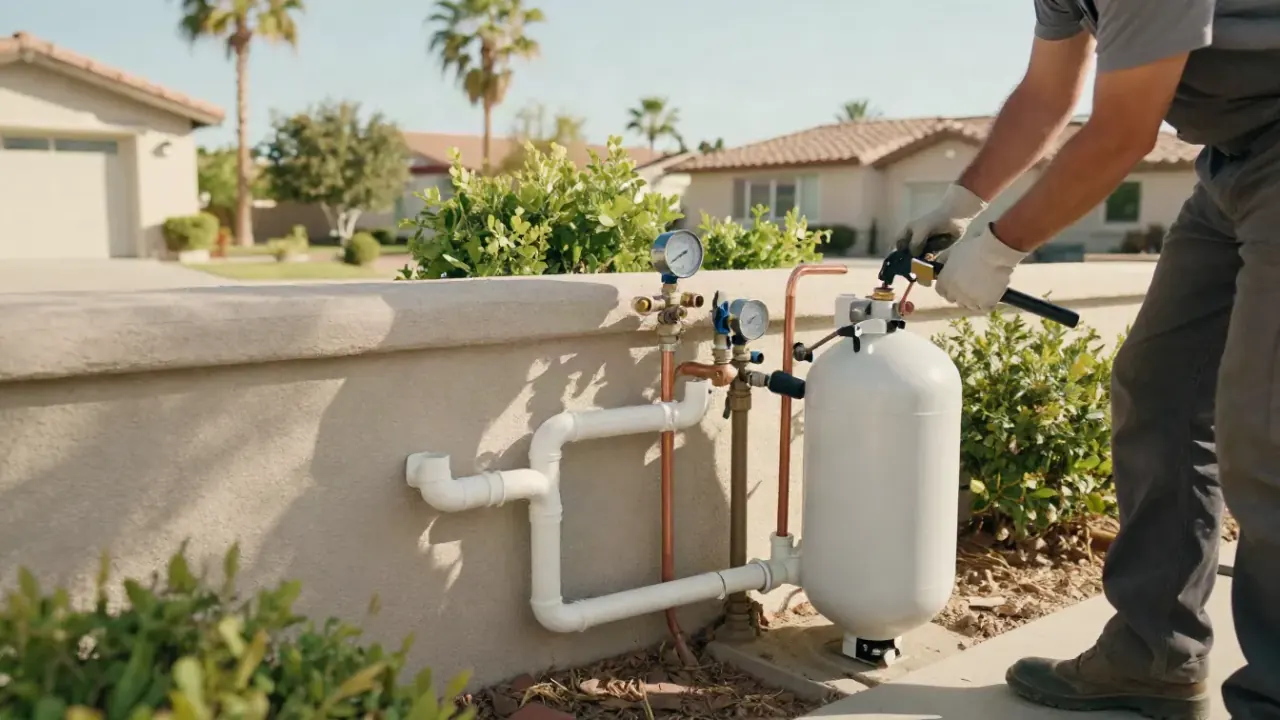
We replace the failed valve, piston, seals, brine well components, or drain tubing, then reprogram the control valve programmer to your water conditions. Most jobs run two to four hours. We use copper soldering torch or PEX crimping tool work only when a line needs redoing.
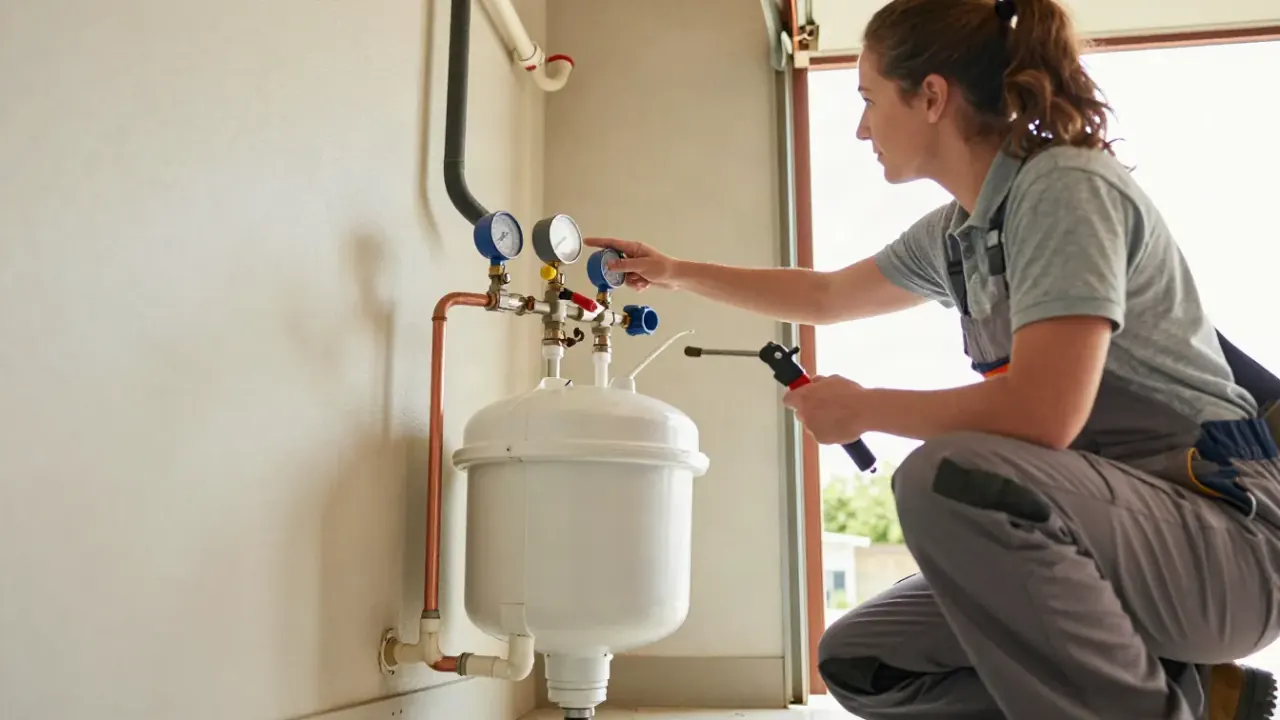
We force a full regeneration cycle and watch it end to end. Brine draws, the resin tank backwashes, and the unit returns to service position on its own. If it hesitates anywhere, we catch it here instead of you catching it next week.
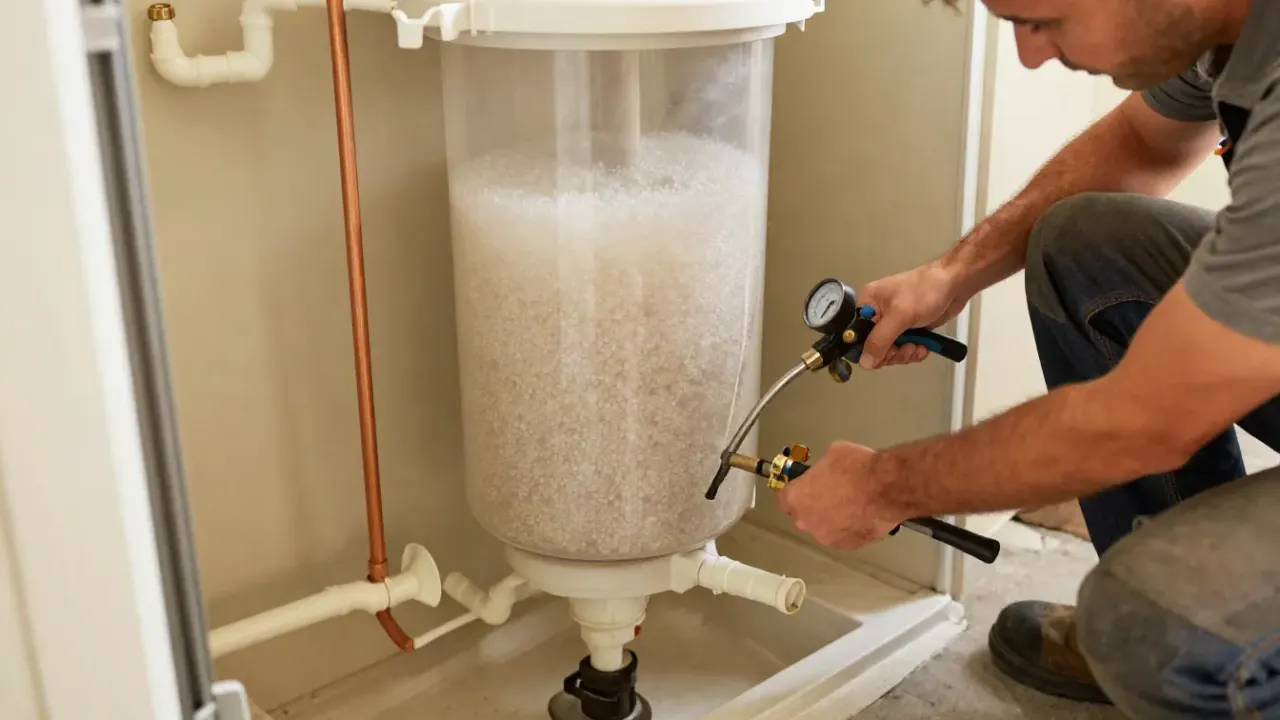
We show you what failed, what we replaced, and how to set hardness and salt levels going forward. You get the regeneration schedule explained in plain terms, plus a quick lesson on spotting a salt bridge before it becomes a call-out.
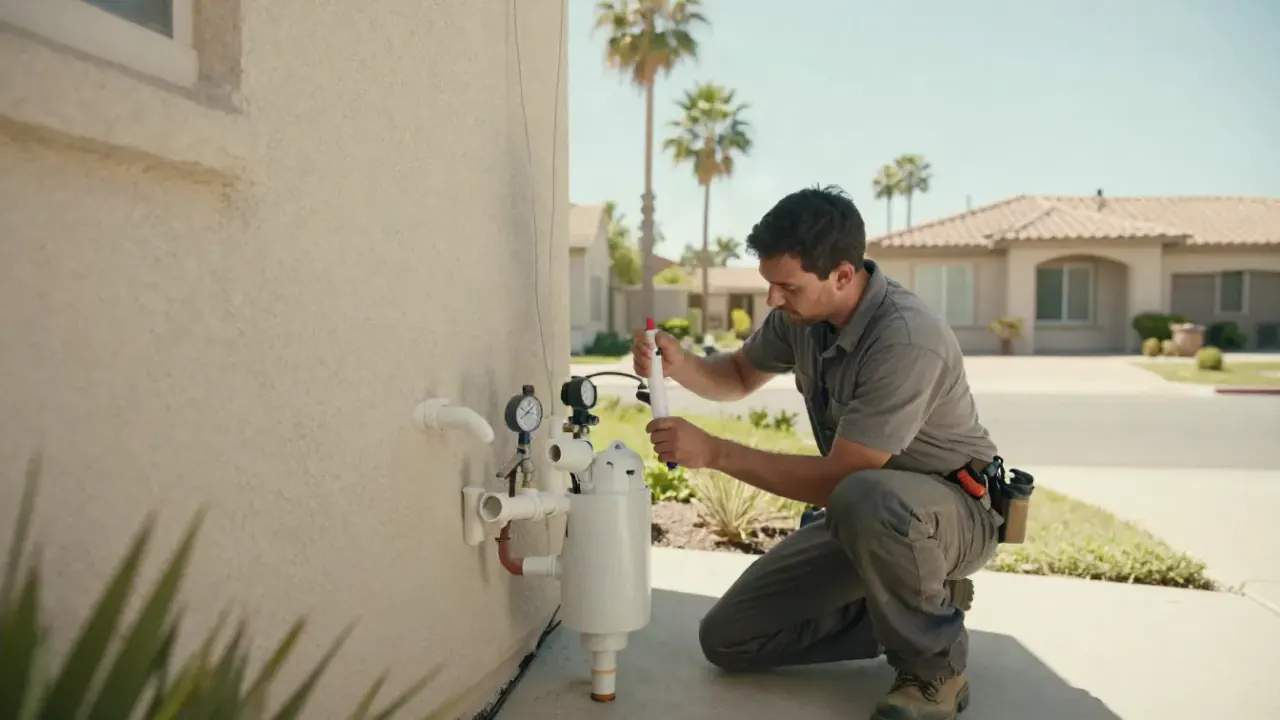
Move across a circle, or focus it and press Enter, for an illustrative thermal view of the photograph.
Measures raw and treated hardness in grains per gallon so we know exactly how much softening capacity the unit is losing and whether the repair restored it.
Confirms total dissolved solids before and after the softener, which separates a softening problem from a filtration problem that needs different equipment.
Reads and resets the valve's regeneration schedule, hardness setting, and cycle times so the unit matches your actual water and household demand.
Removes caked salt, sludge, and debris from the brine tank and brine well so the draw works cleanly and the new salt dissolves properly.
Checks household static and dynamic pressure, ruling out a pressure problem that looks like a softener failure but is really a plumbing issue.
Thermal views are illustrative, generated from the photographs.
Used when a drain line or supply connection needs redoing, so the new tubing and fittings are sealed to California Plumbing Code.
Isolates the softener from household plumbing safely so we can work on the unit without shutting water off to the whole house.
We confirm the unit and any replacement components meet the standard for residential cation exchange softeners. It keeps the system listed and protects the manufacturer's performance claims.
Drain lines, air gaps, and supply connections get rebuilt to CPC requirements. That matters at inspection time and when a future plumber works on the system.
Replacement valves, fittings, and tubing we install carry IAPMO/UPC listing, so the repair does not create a code problem down the road.
Every repair ends with a forced regeneration we watch from start to finish. Brine draw, backwash, and return to service all get verified before we pack up.
Your dishes come out spotty and soap will not lather, but the softener still runs.
That pattern usually means the unit is running without actually softening. We test hardness at the tap, check the brine draw, and confirm whether the resin is exhausted or the valve is skipping the regeneration cycle.
Outcome: You get a clear answer and a repair that restores soft water, usually the same day.
The brine tank is full of salt but the level never drops.
Salt that never drops points to a salt bridge or a blocked brine line. We clear the bridge, vacuum the tank, and flush the brine line so the draw works again.
Outcome: Regeneration completes normally and your salt purchases actually do something again.
Water is pooling around the softener or the drain line drips constantly.
We trace the leak to the fitting, O-ring, or drain tubing, replace the failed part, and pressure-test the repair. Cracked resin tanks get an honest replacement quote instead of a patch.
Outcome: A dry floor, a sealed system, and no more water damage creeping into your cabinets.
The unit is stuck mid-cycle or showing an error and will not return to service.
A stuck piston or failed motor leaves the valve between positions. We rebuild the valve, replace the motor or seals, and reprogram the controller for your water conditions.
Outcome: The softener finishes its cycle, returns to service, and softens like it should.
You are selling the house and the buyer's inspector flagged the softener.
We diagnose the flagged issue, repair it, and run a full regeneration test so the unit is verified working. You get a clear record of what was repaired and what was tested.
Outcome: A working softener at closing and one less negotiation point on the sale.
Fountain Valley sits on hard imported water, and that shapes every repair we do here. Hardness runs high enough that softeners work hard year-round, and the salt bridges and resin fouling we see are a direct result.
The housing stock matters too: much of Green Valley and Los Caballeros was built in the 1960s and 1970s, so we regularly work around original copper, tight utility closets, and drain lines that were never sized for a modern unit. Newer builds on PEX are quicker to service, but they still need the drain line and air gap checked against California Plumbing Code.
Summer is our busiest season for water softener not regenerating repair Fountain Valley CA calls, because higher water use pushes tired valves over the edge. Winter brings its own pattern: brine tank overflow repair in Fountain Valley, California spikes when humidity cakes the salt into a bridge. We stock parts for both and schedule around your household so the water stays on.
Before: A Green Valley homeowner had no soft water for three weeks. The Fleck valve was stuck between cycles, salt was not dropping, and dishes came out spotted. The resin bed tested fine, so replacement was not needed.
After: We rebuilt the valve with new pistons and seals, cleared a partial salt bridge, and reprogrammed the controller. Hardness dropped from 18 grains to under 1, and the unit completed a full regeneration on the first test.
Check salt monthly, break up any crust before it hardens, and keep the brine well clear. Annual service keeps the rebuilt valve on schedule.
Before: A rental unit in Los Caballeros had water pooling under the softener. The drain tubing had cracked at a fitting, and the tenant had been mopping it up for a week. The resin tank and valve were both healthy.
After: We replaced the drain tubing and fittings with new PEX, resecured the line, and pressure-tested the repair. The floor stayed dry through a full regeneration cycle, and the tenant stopped mopping.
Inspect the drain line twice a year for cracks or kinks. Keep the discharge point clear so backpressure never stresses the fittings.
Before: A homeowner in 92708 had orange staining on fixtures and hard water despite a running softener. The resin was fouled with iron, and the unit was regenerating twice as often as it should, burning through salt.
After: We cleaned the resin bed, added a sediment pre-filter upstream, and reset the regeneration schedule. Salt use dropped by roughly a third, staining stopped, and hardness at the tap came back under 1 grain.
Replace the sediment pre-filter every six to twelve months and test hardness quarterly. That keeps iron off the resin and salt use predictable.
Most softener failures announce themselves before they quit completely. Here are the ones we see most in Fountain Valley, and what ignoring them costs.
Soft water back, scale stopped, and a unit that finishes its cycles.
Most repairs finish in two to four hours, so you are back to soft water before dinner. We carry common valves, brine well parts, and PEX fittings on the truck, which means fewer return trips and no waiting on a part order for routine fixes.
Hard water scale buildup does not stay in the softener. It moves into your water heater, dishwasher, and fixtures.
A softener with a good resin bed and a sound tank rarely needs replacing. If the control valve, brine assembly, or drain line is the problem, we repair it. That saves most homeowners several hundred dollars over a new system and keeps a working unit out of the landfill.
You get the diagnosis and the price before any wrench turns. If replacement genuinely makes more sense, we tell you why and show you the numbers.
Clear records you can keep and share.
What was tested and repaired
Images of the failed part
Hardness and salt dosage set
Regeneration cycle result
Most softener failures are one part, not the whole unit. Here is how the three outcomes differ.
A single component failed and the rest is sound
The unit works but resin or brine is fouled
The tank or resin is past saving
A list like this tells people straight away whether you cover their street. Not listed? Call and ask: it only takes a minute.
Based in Fountain Valley and covering the places around it. Pick one for local details.
We do, and we work on every major brand, from Culligan and Kinetico to Fleck, Clack, GE, and Whirlpool. Call and describe the symptom; we will tell you what it usually means and book the visit.
The three most common causes are a salt bridge in the brine tank, a failed control valve that never reaches the brine draw, and resin fouling from iron or sediment. Any one of them stops softening even though the unit still runs. We test hardness at the tap, inspect the brine well, and confirm which one it is before quoting the fix.
Diagnosis is included in the repair. If the unit is past saving, we tell you and price a replacement instead of charging for a repair that will not hold.
Yes, in most cases. If the resin tank is sound and the resin still exchanges, a softener is worth repairing. Valves, pistons, seals, brine wells, and drain lines all replace cleanly. Replacement makes sense when the tank is cracked, the resin is fouled beyond cleaning, or repair cost passes half the price of a new system.
Other services from the same team.
One call gets you a diagnosis, a straight answer, and a price before we start.
Have questions or ready to schedule? Call us at (714) 579-8780 or email info@fountainvalleywatersoftenerpros.com. We are open Monday through Friday, 8:00 AM to 6:00 PM. We respond to all inquiries within one business day. For urgent issues, call us directly.